
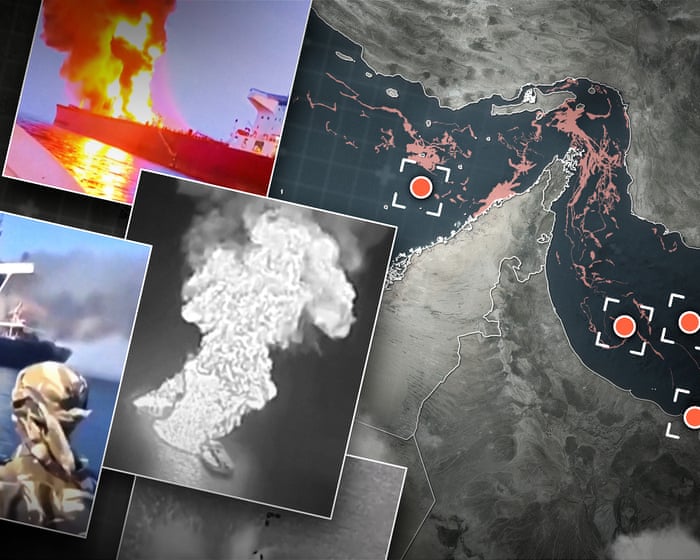
The war between the US, Israel and Iran has turned the strait of Hormuz, one of the world’s busiest oil shipping routes, into a battlefield, but also the centre of a deepening environmental disaster. Tankers struck by missiles or sea mines are leaking oil into the Gulf, leaving vast slicks visible from space, staining coastlines and threatening lasting damage to marine ecosystems. Many of these areas remain inaccessible because of the naval blockade, making it virtually impossible to document the devastation on the ground. The Guardian has examined dozens of satellite images and spoken to environmental experts in an effort to assess the scale of the damage
Trending
- Trump Administration Awards First-Ever Deep-Sea Mining Exploration Leases
- Ugandan oil official welcomes transition roadmap as nation gears up for exports
- How the war in Iran turned the Gulf into a climate catastrophe – video explainer
- COP31 Bulletin Day 11: Countries decry cover text for omitting fossil fuels
- Blue Wave Trickled Down to Little-Known Utility Commissions
- Data centers’ electricity use is soaring — especially in these states
- Is it OK to want a ‘normal life’ during the climate crisis?
- Eat your cup: could edible packaging help solve the world’s plastic problem?
How the war in Iran turned the Gulf into a climate catastrophe – video explainer
 By hernan
Add A Comment